Unlocking the Benefits of Aluminum Metal Castings: Why Foundry Solutions Are Essential for Manufacturers and Industries
Aluminum metal castings offer significant advantages for various industries. Their combination of low weight and exceptional durability makes them a top selection in fields like automotive and aerospace. Foundry innovations serve a critical function in streamlining manufacturing workflows. These breakthroughs not only boost productivity but also contribute to long-term sustainability targets. As manufacturers seek to improve quality and reduce costs, understanding the nuances of aluminum casting becomes increasingly important. How could these developments shape the trajectory of modern manufacturing?
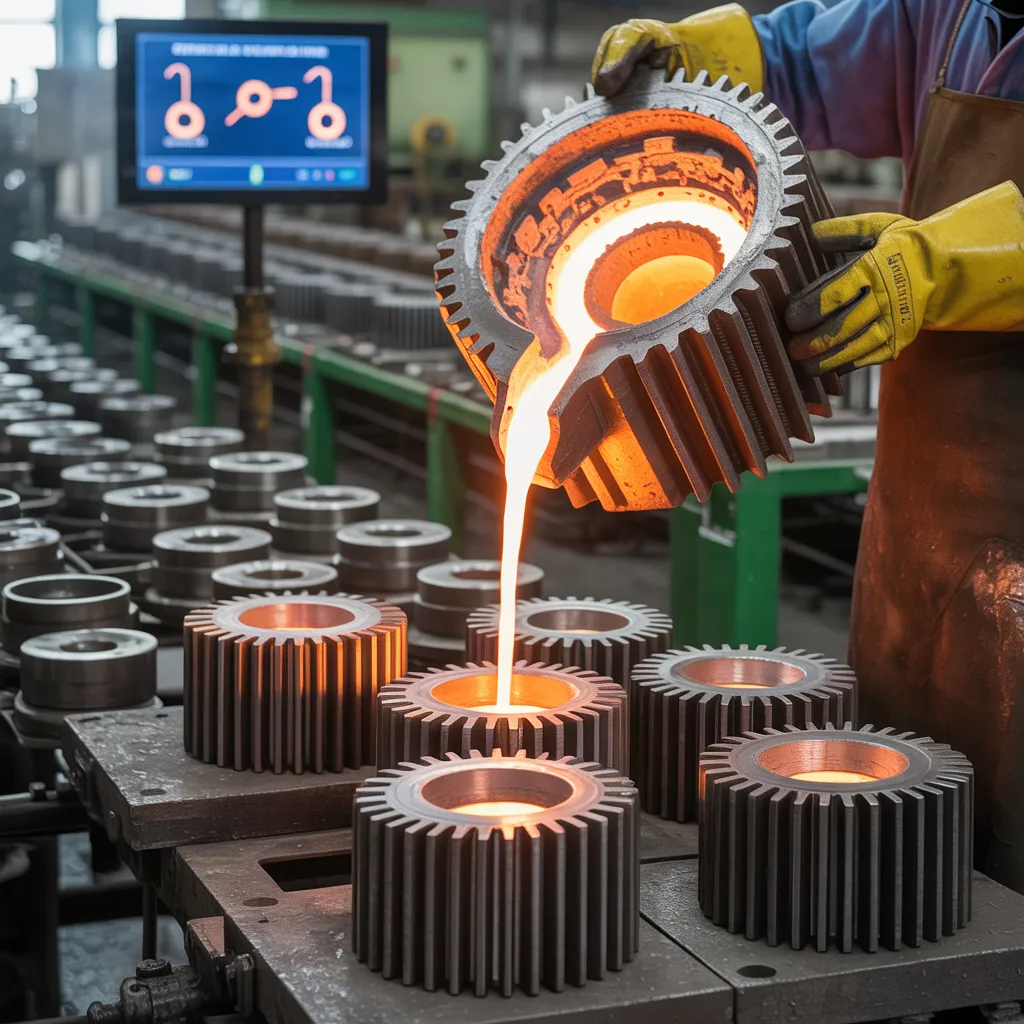
The Special Attributes of Aluminum Metal Castings
Aluminum metal castings exhibit an exceptional set of characteristics that make them extremely beneficial in numerous applications. Their reduced mass significantly decreases the total weight of products, enhancing fuel efficiency in transportation sectors. Additionally, aluminum displays excellent corrosion resistance, guaranteeing longevity in challenging surroundings. Its ability to conduct heat allows for efficient heat management, making it perfectly suited for parts used in automotive and electronic industries.
Additionally, aluminum lends itself to easy machining and forming, supporting detailed designs and cutting production costs. The alloying properties of aluminum boost its structural properties, empowering manufacturers to engineer castings for targeted performance criteria. This multifaceted nature renders aluminum ideal for a wide variety of industries. Lastly, aluminum's recyclability promotes sustainability, as it can be reclaimed without diminishing its fundamental qualities. Together, these unique properties establish aluminum metal castings as an essential material in modern manufacturing, offering enhanced efficiency alongside consistent performance in numerous applications.
Top Industries Benefiting From Aluminum Castings
Various industries leverage the benefits of aluminum castings to enhance their products and processes. The automotive sector employs aluminum castings for weight-reduced parts, boosting fuel efficiency and vehicle performance. In the aerospace sector, manufacturers appreciate aluminum's exceptional strength-to-weight characteristics for critical parts that must endure extreme conditions. The consumer electronics industry gains value from aluminum castings by creating durable and aesthetically pleasing enclosures for devices.
In addition, the building sector makes use of aluminum castings for structural components, benefiting from their durability and resistance to corrosion. The marine sector similarly utilizes aluminum castings to create elements that resist demanding marine environments while reducing overall vessel weight. Finally, manufacturers of healthcare equipment utilize aluminum castings for healthcare instruments, prioritizing cleanliness and dependability. Collectively, these industries demonstrate the versatility and essential nature of aluminum castings in driving innovation and efficiency across diverse applications.
The Reasons Aluminum Is More Cost-Effective Than Other Metals
Aluminium proves to be a cost-effective metal because of its light but strong qualities, making it an ideal choice for numerous purposes. Lower production costs also strengthen its attractiveness, enabling producers to manage costs effectively while maintaining quality. Moreover, its outstanding heat management properties makes aluminum a viable solution for sectors that need effective thermal regulation.
Lightweight But Resilient Solution
Cost-effectiveness in material selection frequently depends on striking an equilibrium between strength and lightness. Aluminum emerges as an exceptional option owing to its low-density characteristics, which contribute to decreased transportation and handling costs. The material's natural strength-to-mass ratio guarantees that products can withstand significant stress without sacrificing ease of movement. Moreover, aluminum's natural corrosion-resistant qualities enhances its longevity, reducing the need for frequent replacements. This robustness leads to lower lifecycle costs, positioning aluminum as a wise financial choice for manufacturers. Beyond this, its adaptability enables a broad spectrum of implementations across industries, from automotive to aerospace. Through selecting this material, fabricators gain both economic advantages and also strengthen the durability and efficiency of their goods.
Lower Production Costs
Producers regularly discover that aluminum provides considerable benefits in operational costs compared to alternative metals. The metal's reduced density enables decreased material consumption, which immediately results in significant savings. Additionally, the metal's straightforward machining and fabrication process lowers workforce expenses and operational time, positioning it as a highly efficient option for producers. Aluminum's outstanding recyclability continues to strengthen its economic value, as recovered aluminum consumes considerably less energy compared to initial production. Beyond that, aluminum's durability and resistance to corrosion lead to lower maintenance costs over the product's lifespan. By selecting aluminum for metal casting applications, producers can realize significant cost reductions while upholding premium quality benchmarks, positioning themselves favorably in competitive markets.
Outstanding Thermal Conductivity
One of the standout features of aluminum is its superior thermal conductivity, which substantially increases its cost-effectiveness in numerous applications. This characteristic enables aluminum to move heat rapidly and effectively, making it a top candidate for industries in need of quick thermal management, such as aerospace and automotive manufacturing. Relative to alternative metals, aluminum's capacity to transfer heat with professional tips minimal energy waste decreases overall operational spending, particularly in temperature control systems. Furthermore, its low-density composition means that components can be engineered using fewer materials while maintaining performance, lowering costs even further. Ultimately, aluminum's exceptional heat transfer capability not only provides functional advantages but also contributes to overall cost efficiency, cementing its status as a top choice across manufacturing and industrial fields.
How Can Foundry Solutions Boost Production Efficiency?
As production demands increase, foundry solutions are pivotal in boosting efficiency throughout operations. These solutions simplify processes through the incorporation of advanced technologies, automation, and refined workflows. Through the use of precision casting techniques, manufacturers decrease waste and limit energy consumption, which significantly reduces operational costs.
Furthermore, foundry solutions enable accelerated prototyping and reduced lead times, allowing companies to respond swiftly to market changes. The deployment of live monitoring and data-driven analytics improves decision-making processes, guaranteeing that production parameters remain continuously refined.
In addition, skilled personnel versed in advanced foundry methods support enhanced quality management, decreasing errors and rework. Enhanced collaboration between engineering and production teams generates novel casting approaches that are productive and financially viable. In summary, these factors collectively enhance production efficiency, establishing a stronger competitive position for producers working with aluminum metal castings.
Sustainable Practices in Aluminum Casting
Implementing sustainable practices in aluminum casting significantly minimizes environmental impact while improving productivity. Many foundries are incorporating sustainability measures, utilizing recycled aluminum as a key raw material. This practice not only conserves natural resources but also necessitates considerably less energy in contrast to mining and refining virgin aluminum.
Additionally, advancements in technological development have produced more energy-efficient furnaces and casting processes, reducing carbon emissions. Utilizing water-based solutions rather than solvent-based products further reduces harmful volatile organic compounds (VOCs), promoting cleaner air quality around foundries.
In addition, robust waste management solutions facilitate the reclamation and repurposing of waste materials, limiting landfill contributions. By focusing on environmentally sustainable practices, aluminum casting manufacturers can adhere to international environmental standards and attract eco-conscious consumers. Ultimately, these approaches not only benefit the planet but also bolster the long-term sustainability and market position of producers in a fast-changing market.
Upcoming Trends in Aluminum Castings and Foundry Solutions
What advancements are defining the future of aluminum castings and foundry solutions? Cutting-edge technologies such as artificial intelligence and machine learning are improving process optimization and quality control. These developments empower manufacturers to foresee defects and refine production, contributing to decreased waste and greater efficiency.
Furthermore, breakthroughs in 3D printing are revolutionizing mold creation, allowing for fast prototyping and adaptation of elaborate designs. This versatility drives the increasing demand for lightweight and high-performance components across a wide range of industries, including the aerospace and automotive industries.
Sustainable practices remain a central priority, with foundries progressively implementing recycling practices and energy-efficient technologies. The adoption of digital twin systems facilitates predictive maintenance and real-time monitoring, continuously optimizing workplace performance.
As the sector advances, cooperation between producers and technology developers will encourage the advancement of more intelligent and sustainable foundry approaches, ultimately transforming aluminum casting processes through innovation.
Commonly Asked Questions
What Categories of Products Are Frequently Produced From Aluminum Castings?
Common products made from aluminum castings include automobile components, manufacturing machinery elements, consumer device casings, aviation components, and ornamental pieces. These applications utilize aluminum's corrosion-resistant, lightweight, and flexible characteristics for superior strength and reliability.
How Do Aluminum Castings Stack Up Against Steel When It Comes to Strength?
Aluminum castings are typically lighter compared to steel castings, providing similar strength-to-weight ratios. While steel typically provides superior tensile strength, developments in aluminum alloys have significantly improved their performance, allowing them to be used across numerous applications.
What Is the Average Lifespan of Aluminum Castings?
The expected lifespan of aluminium castings varies between 10 and 50 years, based on factors including environmental conditions, intended application, and alloy composition, rendering them an enduring choice across diverse industries and applications.
Do Aluminum Castings Offer Corrosion Resistance?
Aluminum castings exhibit excellent corrosion resistance owing to the creation of a protective oxide layer. This property makes them suitable for various applications, particularly in conditions where exposure to moisture and harsh conditions is common.
How Do I Select the Best Foundry for My Requirements?
To identify the ideal foundry, one must evaluate their capabilities, industry experience, quality standards, and customer service. Additionally, consulting past project records and requesting referrals can help confirm alignment with specific manufacturing needs and expectations.